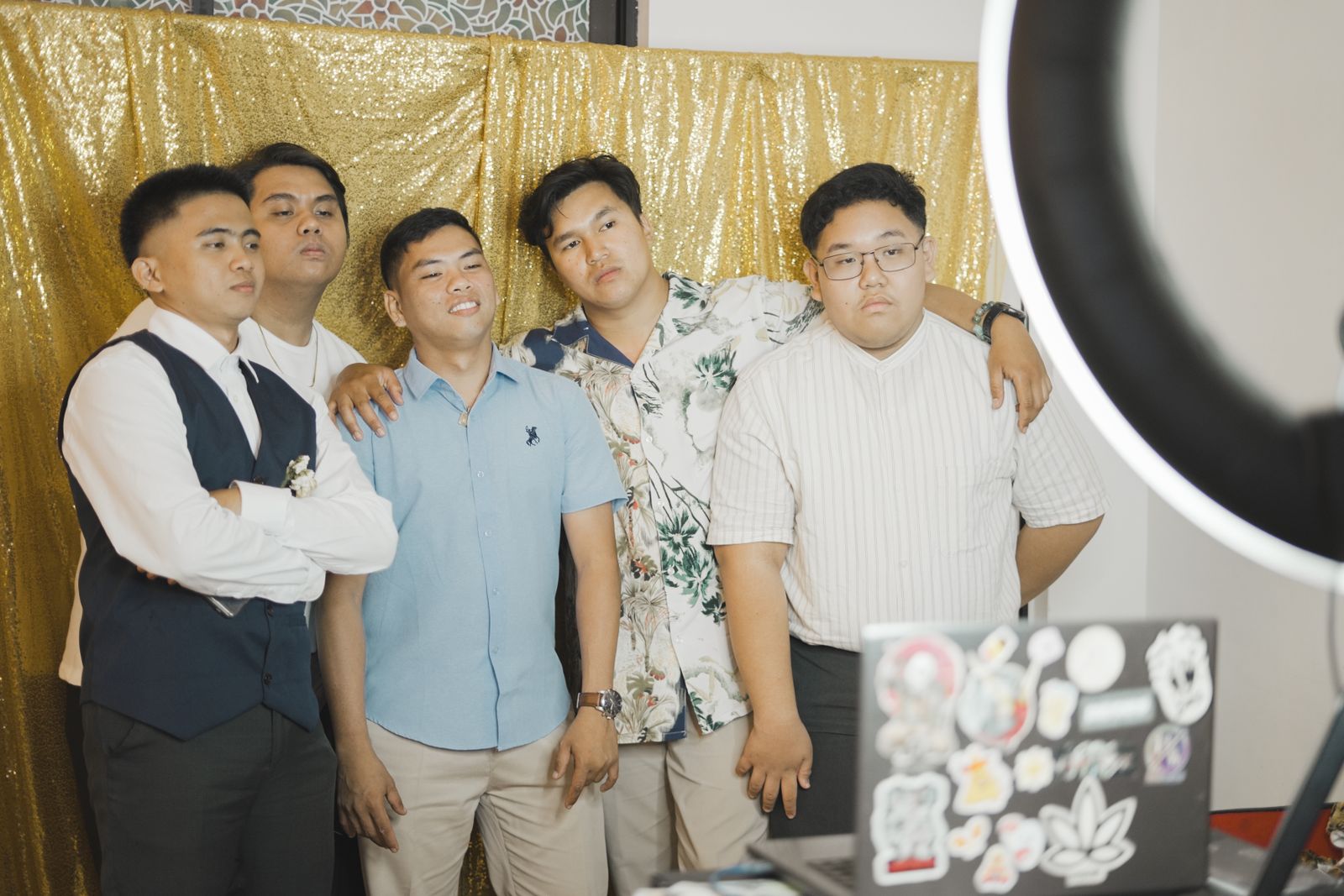
When it is time to choose a photo service for an event, one question comes up quickly: a classic photo booth or an AI photo booth. Both hand the guest a photo and both fill the same slot in the evening’s programme, but the experience is different. Below is a practical comparison that helps you decide without getting into the technology.
A classic photo booth takes the shot and delivers it straight away — what the camera saw is the final result. Guests pose, grab the props and have the print in their hands moments later.
An AI photo booth adds one step in between: artificial intelligence processes the captured frame and turns it into a new image. The guest gets a stylised portrait that does not look like an ordinary party snapshot. That element of surprise is the main value of an AI photo booth — nobody knows exactly what will come back.
Technically both solutions run on the same logic: a camera, lighting, a screen and a printer. What differs is what happens between the capture and the print.
A classic photo booth is self-explanatory to every guest, whatever their age. Press the button, watch the countdown on the screen, pose, take the photo. Nothing needs explaining, and at a large party that is a real advantage: the photo zone runs on its own without someone standing beside it all evening.
An AI photo booth asks for a little more attention. The guest takes the shot, waits for the processing and only then sees the result. The waiting is part of the experience: people gather around the screen, comment and want another go straight away. A small crowd forms around the photo zone, which is good for the energy of the evening.
So the question is whether you want a fast, steady flow or a longer pause that gets people talking.
If there are many guests and the photo zone is only open for a short window, the classic photo booth is the safer choice. Less time passes between the shot and the print, so more people get through in the same hour.
An AI image takes longer, because the processing happens after the capture. At a large event it is worth planning a longer opening time for the photo zone, or opening it earlier in the evening. If you are expecting 150 guests and the photo corner is open for only an hour and a half, an AI solution will almost certainly create a queue.
A practical solution at a big party is to open the photo zone during the reception, while guests are arriving and almost everyone is still on their feet. The load spreads out more evenly and there is no queue during the formal part of the evening.
PicMe photo booths — both the classic and the AI version — produce photos in two formats: a classic 10 × 15 cm print and a 5 × 15 cm photo strip with several frames on one strip. The format shapes how the photo is used: a 10 × 15 goes into a frame or an album, while a strip tends to end up in a bag, a wallet or on the fridge door.
There is one detail worth thinking through with AI photos: they are not a documentary memory of the evening but a stylised image. If you also want guests to leave with a recognisable group photo, it makes sense to add a regular photo zone next to the AI booth, or to ask for a classic version of the shot as well. Digital copies can be shared with guests separately in both cases — we have written about that in more detail in sharing photos with your guests.
If the event is large and the budget allows, a combination works well: the AI photo booth as the attraction of the evening and a classic photo zone beside it for everyone who simply wants a good group photo. We have compared how the different devices relate to each other in photo booth, photo mirror or 360° — how to choose.
The space requirements are similar for both. The booth itself takes up about 1 m², but you also need to allow for the backdrop: a standard backdrop is 1.5–2 m wide and 2.5 m high, and there has to be free floor area in front of it where a group can stand and move. In practice that means setting aside a corner of the room for the photo zone rather than squeezing it into a corridor next to the cloakroom.
Both devices need power and a spot where the cables do not end up under the guests’ feet. The technical team has to arrive before the guests do, which is worth agreeing separately with the venue, especially if something else is taking place in the room before your event.
Light is where the difference shows. A classic photo booth depends more on how well the photo zone is lit. AI processing can even the result out, but the source frame still matters: a shot taken in a dark corner stays dark.
Neither solution is a product with one fixed price. A quote is put together from several parts, and these are the points worth stating in your enquiry straight away:
The more precise the enquiry, the faster you get a concrete answer. The date, the time, the number of guests and the venue address are usually enough — the rest can be settled together.
How many guests are there and how long is the photo zone open? In a narrow time window the classic photo booth wins.
What should the guest remember the next day? If the answer is “a good photo of me and my friends”, go classic. If it is “something I have never done before”, go AI.
Does the event repeat? For an annual company party a new format is worth more than it is for a one-off occasion.
We have also looked at the role of a photo booth in a company evening in a photo booth at a company party.
Once you know the date, the number of guests and the venue, we can advise which solution suits your evening better — and say honestly when the classic photo booth is the more sensible choice. Get in touch and ask for a quote, and we will work out together which photo zone goes up at your party.