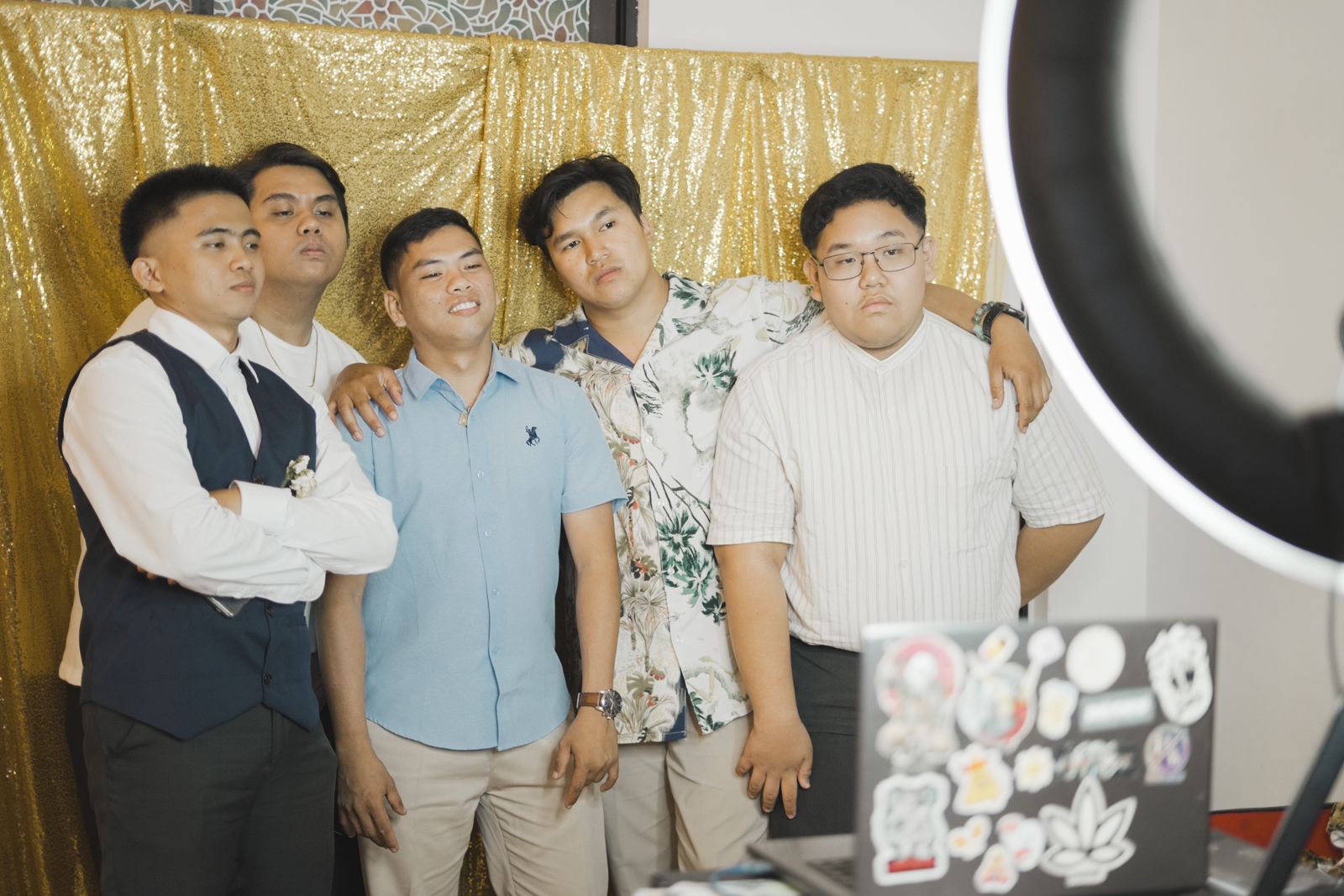
When three names land on the table as you choose entertainment for an event — photo booth, photo mirror and 360° video camera — they all look at first glance like the same thing. In reality they differ a lot in result, space needed and how they pull guests in. Here is how to pick the format that will genuinely work at your party.
The photo booth is the most classic and the safest choice. Guests see themselves on screen, pose together and moments later hold a real paper print. That print is what makes the difference: a phone picture disappears into the gallery, a paper photo ends up on the fridge door.
There are two formats. 10 × 15 cm is the classic size that fits an album and a frame. The 5 × 15 cm photo strip puts several consecutive frames on one strip — the format that made old photo booths famous, and in a group by far the most fun.
A photo booth also works because guests understand it without explanation. A touch on the screen, a countdown, three or four frames and a print — no instructions needed, and even older guests walk up confidently. Props (hats, glasses, signs) speed it up further: they give people something to do with their hands and remove the awkwardness in front of the camera.
A practical plus: a photo booth takes up about one square metre. In a smaller hall or restaurant where every metre counts, it is often the only format that properly fits. Besides all the pictures, the organiser also receives a full photo report of the evening.
The photo mirror is more interactive. The controls are built straight into the mirror — the guest touches its surface, sees animations and prompts, and the process becomes a small performance of its own. The camera is vertical, so you can shoot full length: dress, suit and shoes all stay in frame.
It draws attention even when nobody is shooting. The mirror is a visible object in the room and guests walk over out of curiosity. The trade-off is space: it needs more clear floor in front of it than a booth, because people step into the frame whole and often several at a time.
For weddings we have written up the differences between the photo booth and the photo mirror separately, in the post Photo booth or photo mirror rental for a wedding – which one to choose?.
The 360° video camera works differently. The guest steps onto the platform, the camera rotates around them and captures slow-motion video with the whole room as backdrop. The clip is processed automatically and sent out by email or to social media — the guest can share it before the evening is over.
The result is not a paper photo, it is content. That is why 360° suits marketing and brand events and parties with a younger crowd, where sharing is part of the point. At birthdays and company parties it works as a strong interlude: a crowd always forms around the platform, because watching others being filmed is almost as entertaining as standing on it yourself.
Two things are worth noting. First, the guest is left with nothing in hand unless they open the email — so 360° works best alongside a printing format, not instead of one. Second, it takes more time per guest than a booth, because people step on one at a time or in small groups. With a hundred guests, that means opening the 360° in a defined time window rather than letting it run quietly all evening.
The space requirement is highest here. A clear circle must remain around the platform so the rotating arm moves safely, and it makes sense to allow room beside it for a queue.
In practice the choice usually falls apart over logistics, not taste. Before booking, go through a short list:
The choice does not have to be either-or. Most often a photo booth is booked as the main format plus a 360° camera for the second half of the evening, once the mood is up. The photo zone can be reinforced with a backdrop matching the concept of the event — for example a sequin-panel “living backdrop” as an add-on at 150 €, plus photo accessories and balloons. Sound equipment, a host and DJ and a heavy smoke machine fit into the same evening with us, so the whole technical side comes from one place.
If you are unsure whether a photo zone pays off, the reasons are summed up in the post 5 reasons why a photo booth makes every event memorable. For the wider preparation of a company party, the steps are in the post Company Christmas party 2026: the organiser’s checklist.
Autumn is the busiest part of the season: company and Christmas party dates fill up already in September and October, so popular Fridays disappear first. If you know your date, lock it in before the format is finally chosen — the exact solution can be agreed later.
PicMe is a local Estonian team that has served events for over five years and works across the whole of Estonia: Tallinn, Tartu, Pärnu, Narva, Kohtla-Järve, Jõhvi, Viljandi and Rakvere. Send us your event date, venue and guest count — we will recommend a format and send a quote. Request a quote and book your date.
Once the choice is made, concrete prices and packages are on the page photo booth rental in Tallinn.
Prices and terms by city: photo booth rental in Tallinn and photo booth rental in Tartu.