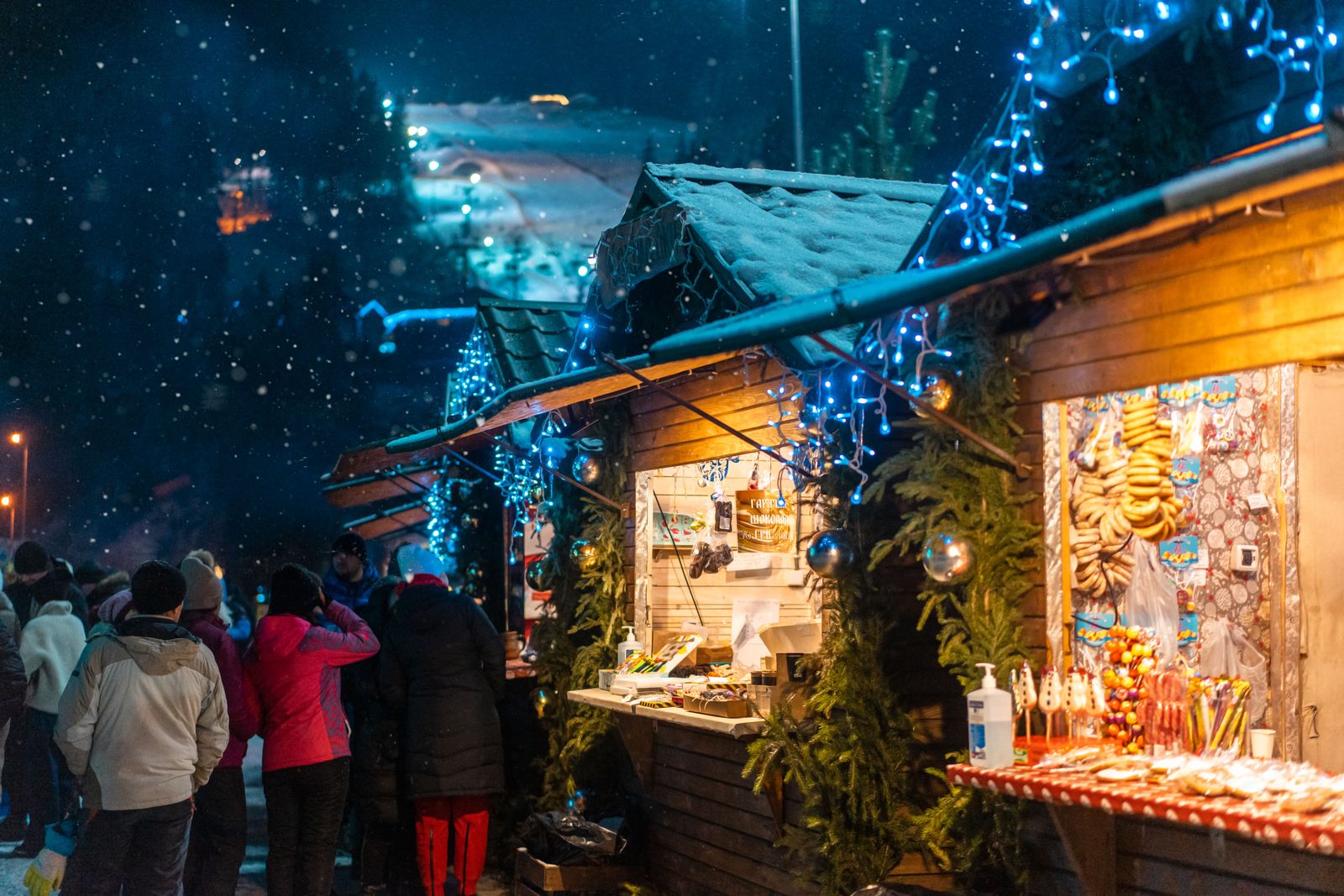
A winter event held outdoors in Estonia is always a compromise. In December the sun sets in Tallinn at around 15.20, daylight lasts a little over six hours, and the evening temperature usually sits between +2 and −5 degrees. The party starts in the dark and ends in the cold. A well prepared outdoor event still works beautifully — a poorly prepared one falls apart within half an hour, because guests go inside to warm up and never come back out.
Below is a practical look at the three things that actually decide the fate of a winter outdoor event: heating, lighting and equipment. Plus the timeline and the back-up plan that hold the evening together when the weather does its own thing.
The most common mistake is planning the whole evening outdoors. In winter that does not work. A realistic window is 40 minutes to an hour and a half per outdoor block, assuming people are dressed for the season and can move around. For a seated dinner that window shrinks to about half an hour.
So a winter outdoor event is best built in blocks: outside you have the welcome, the welcome drink, the ceremony, the photo zone, a short concert or fireworks; inside you have the food, the speeches and the dancing. The indoor room is the default venue and the outdoors is a deliberate change of scene. If outdoors is the only option, then everything else on the list — heating, light, cover — has to be several times stronger.
Heating only works in winter when it is layered. One patio heater for 60 people warms nobody.
The surface underfoot matters just as much. Cold concrete or wet grass pulls the warmth out through your feet. A wooden platform, carpet or even straw mats make long periods of standing bearable.
At a winter outdoor event light is not decoration, it is infrastructure. If it is already dark by four in the afternoon, light is what makes sure guests find the car park, the entrance, the bar and the toilets — and what keeps the photos from coming out black.
A practical split has three levels. Path light from the car park to the door: ground-facing fixtures, small lanterns or even candles in jars every 3–4 metres. General light over the area where people talk: a light chain or a floodlight that gives a warm, even background. Spot light where something is happening — the bar, the stage, the photo zone.
The most frequent mistake is a powerful cold floodlight aimed straight into people’s faces. The result is hard shadows and photos of guests squinting. We covered the same subject indoors in our article on photo zone lighting and why photos come out dark — the same rules apply outdoors, only more sharply, because there is no ambient light to fall back on.
A winter outdoor event draws electricity from three directions at once: heating, lighting and equipment. Electric patio heaters are the greediest of the three, which is why larger events tend to use gas heaters and leave the sockets to light and equipment.
Photo equipment, audio gear and screens all work in the cold, but batteries drain faster and condensation is a real risk if a device is carried straight from the frost into a warm room. The practical rule: equipment stays at the same temperature for the whole event and is unpacked only once it has adjusted.
For PicMe equipment one simple condition applies: we work outdoors where there is cover, power and protection from rain and snow. The photo booth itself takes up about one square metre, the backdrop is 1.5–2 metres wide and 2.5 metres high, so for a complete photo zone you should allow roughly 3 × 3 metres of dry, level surface. Setting up takes about an hour, and that hour has to come before the guests arrive, not during.
The cover does not have to be a marquee. A terrace, a canopy, a manor colonnade, a barn or an open-sided shed all work. What matters is a roof over the equipment and a dry surface underneath.
A winter evening is actually generous for photographs: lights, snow and outdoor clothing give the frames a character that summer does not have. A couple of things are worth deciding in advance, though.
If conditions outside are genuinely harsh, consider the reverse arrangement: guests move around outdoors while the photo zone sits inside, right by the entrance. That way it doubles as a warming point and fills up on its own. We described similar logic in our article on the autumn event programme, light and photo zone.
With an Estonian winter the question is not whether the weather will change but when. A back-up plan means three specific decisions taken before the event, not during it.
When you send an enquiry to an equipment supplier, state the venue, the times, the number of guests, whether the programme runs indoors or outdoors, and whether cover and power are available. There is a fuller guide in our article on how to write an event equipment enquiry. The more precise the enquiry, the more precise the quote — and the fewer surprises on set-up day.
If you are planning a winter outdoor event and want to know what equipment suits your venue and timeline, get in touch and ask for a quote — we will go through together what is realistic at the venue you have chosen.